There’s a fundamental decision that sits quietly at the heart of every living room we design. It is not about colour or fabric - although those matter equally. It’s the most overlooked decision - what happens at the very bottom of the sofa. How it meets the floor. How it holds itself in a room. Whether it floats above the ground or settles into it.
The choice between a leg, a skirt, and a fringe is, in our view, one of the most consequential decisions in a living room - and one of the most underestimated.
People spend months agonising over fabric and finish, and then treat the base as an afterthought. But the base is what gives a sofa its entire character. It determines whether a piece feels light or grounded, formal or relaxed, classic or contemporary. Here is our expert guide on how to decide what is right.

The Leg: For Rooms That Need To Breathe
A sofa on legs is fundamentally about creating lift and lightness, about creating visual breathing room between the underside of the sofa and the floor - and the way that space makes a room feel larger, lighter, and more considered.
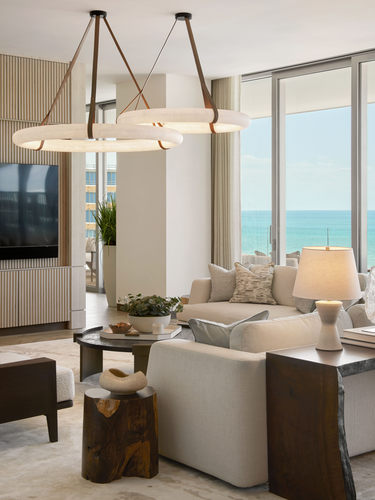
A leg lifts a sofa off the ground and gives it a sense of poise. It feels intentional. Architectural, even. In a room where you want to preserve a feeling of openness- especially where the floor itself is beautiful, or where natural light is travelling across it- a leg allows all of that to continue uninterrupted.
The material and profile of the leg matters just as much as the decision to use one. A slender tapered leg in natural oak reads as quietly Scandinavian: clean, unfussy, contemporary. A turned leg in a dark stained wood carries an entirely different weight - more traditional, more grounded, a nod to Georgian and Regency furniture-making. An antique brass leg introduces glamour and sleekness.
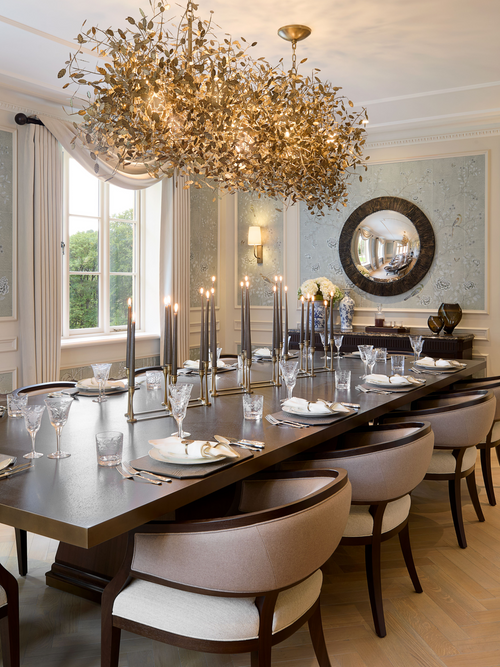
Laura chose the Lawton sofa in Ivory with a leg for the reception room at our Marylebone project. The brief called for a highly formal, elevated space for elegant entertaining. The room was flooded with natural light and had a traditional oak herringbone flooring and bespoke silk & wool rug that we wanted to showcase, so a sofa with a leg was perfect here to make the seating feel graceful and allow uninterrupted light to flood across the beautiful rug design.


The Skirt: For Rooms That Need To Embrace
Where a leg speaks of structure, a skirt speaks of ease. It is the base we reach for when the brief calls for something that invites you to sink in rather than admire from a distance.
A skirted sofa has a generosity to it. It’s softer, more enveloping, more homely. In a casual family space- a television room, a snug, somewhere that needs to feel genuinely lived-in- a skirt is often the perfect detail. It brings the sofa down to earth, literally and figuratively.
Our approach to the skirt, as seen in the Modern Heritage collection, is to treat it as a design element in its own right. The length, the pleat detail, the way the fabric is cut and finished- all of these can be refined and considered to the same degree as any other element of the sofa's design.


A badly executed skirt can look tired and heavy. But a beautifully tailored skirt- precisely hemmed, perfectly proportioned - is one of the most quietly elegant things you can put in a room. It carries an old-world refinement that nothing else quite replicates.
We chose the Lupton Sofa with a skirt base for the living room at our Surrey family home and the TV snug at our Yorkshire country estate design projects. It was the perfect design for these settings, with its traditional domed back, deep, sink in seating, and slim space-saving arms - all softened by a tailored skirt for a cosy family space designed for relaxing.


The Fringe: For Rooms That Need To Meet The Architectural Grandeur
If the leg is architecture and the skirt is comfort, then the fringe is personality. It’s the choice that takes a sofa from beautiful to unforgettable- and one we deploy with great care and intention.
Fringing is a heritage detail with a long and distinguished history. During the Baroque era in 17th-century France, "passementerie" became a status symbol. By the 19th-century Victorian and Gilded Ages, fringed, tasseled furniture - particularly heavy bullion fringe - became synonymous with extreme wealth and luxury. It’s deeply ornate and luxurious, it moves, it catches the light, it introduces a level of craftsmanship and considered detailing that elevates the entire room. But it does need to be committed to, as fringe is not a subtle choice. It's reserved for rooms that need to make a statement. Fringing is heritage. Craft. Lavishness.
In the formal drawing room at our Yorkshire Country Estate, where richer and more elaborate detailing suits, Laura used a Lawton sofa in Ivory with a fringed base to mirror and meet the grandeur of the architecture. She paired this nod to opulence alongside classical swag-and-tail curtains, antique crystal chandeliers and luxurious silk wallpaper. By crafting a setting in a decadent context, the fringing belongs as part of the same conversation.
The key is always asking: what’s this room saying? And does this sofa detail say the same thing?


The Principles: Context, Suitability and Feeling
No one base is superior to another. Our ethos is that each has its place and knowing which to use, and when, is a matter of reading a room with sensitivity and consideration. The base of your sofa should be in conversation with everything else in the room - the architecture, the light, the other furniture, the way the space is going to be used, and by whom. For the rooms that need to breathe: a leg. For the rooms that need to embrace: a skirt. For the rooms that need to make a heritage statement and mean it: a fringe.
Laura purposefully designed two distinctive furniture collections - Modern Heritage and Contemporary - to make this selection process sublimely easy. As our designs all share a common visual language, they can be beautifully paired together within their collections or mixed and matched across the two for a timeless look.